
The 0700 Series

The 0700 Series

In-plane MEMS Directional Microphone

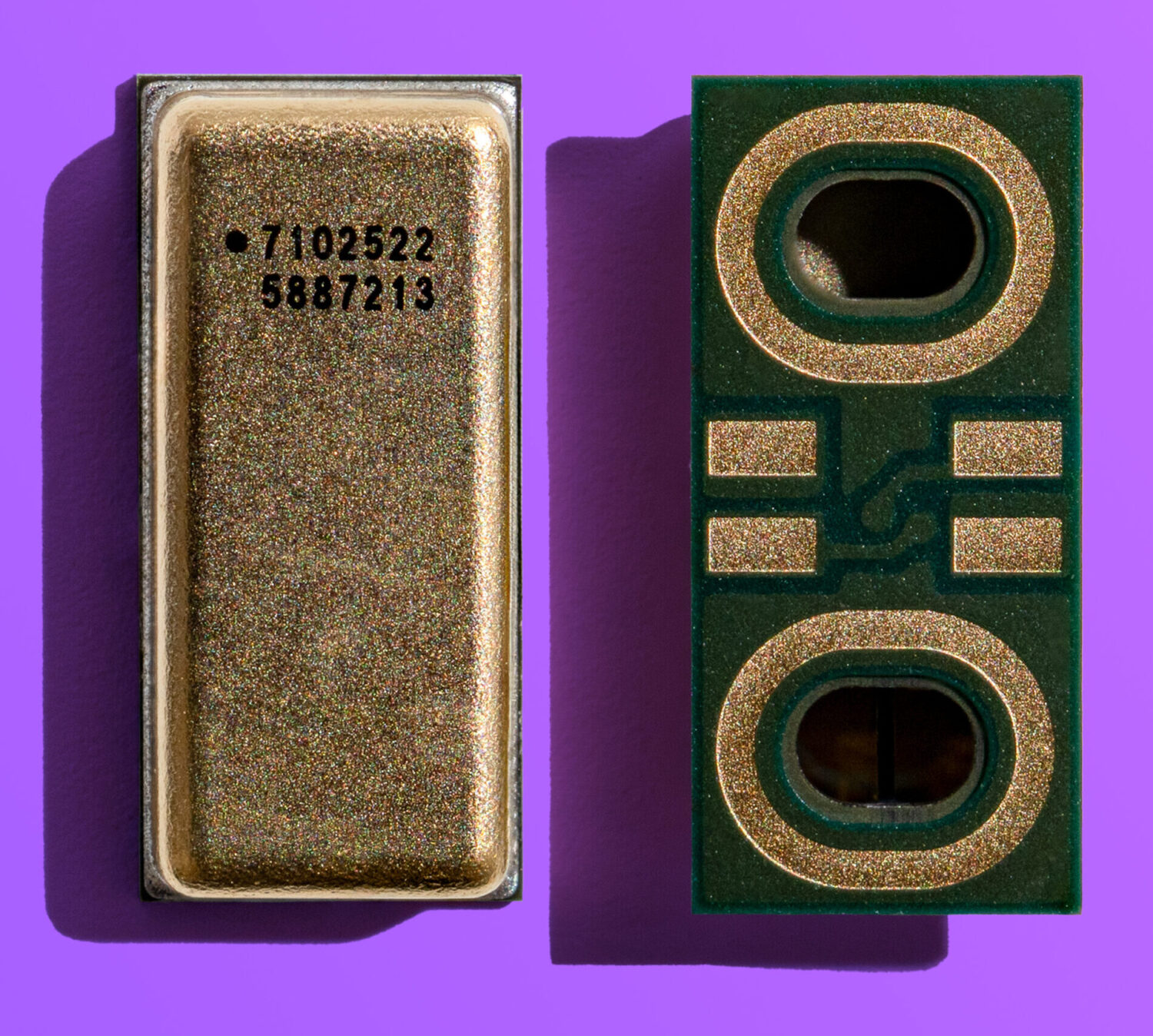
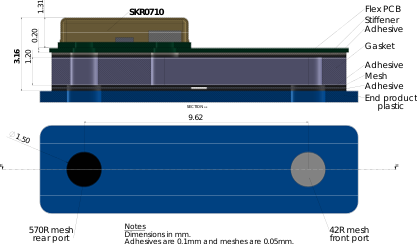
The SKR0710 is Soundskrit’s first directional microphone with in-plane sound ports. With both sound ports embedded into the PCB of the microphone, the SKR0710 integrates into end products in a similar fashion to traditional omnidirectional MEMS microphones. It is ideal for constrained form factors such as smart glasses, earbuds, and other wearable devices.

Specifications

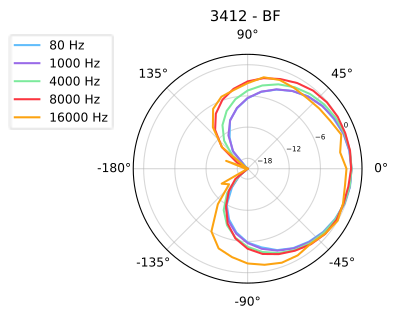
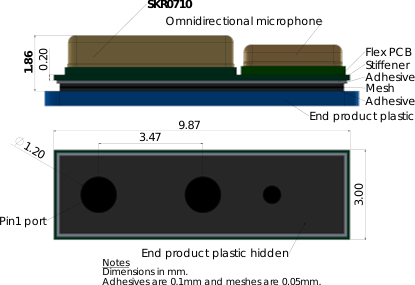
The SKR0710 can be paired with an omnidirectional microphone to create cardioid beamformers with consistent directivity across the full audible range. Both microphones sit side-by-side, eliminating the spacing required by conventional omnidirectional arrays.

Directionality Pattern
Switchable
SNR
66 dBA
Frequency Range
20Hz – 20kHz
Total Footprint
3.00mm x 9.87mm
0710 and Omni Pair polar plot - 2x
0710 and Omni Pair illustration

Our Unique MEMS Design

In-Plane Sound Ports

Both sound ports are embedded inside the PCB of the microphone, simplifying integration into end products

Built-in Directionality

The inherent directionality of the SKR0710 helps isolate users’ voices from background noise with exceptional clarity.

Multiple Directional Modes

When paired with an omnidirectional microphone, the SKR0710 can easily be configured to provide a dipole, hypercardioid, supercardioid, or cardioid polar pattern

Thin Form Factor

The thin form factor of the SKR0710 make it ideal for space constrained applications such as smart glasses, earbuds, and other wearable devices.

Frequently Asked Questions

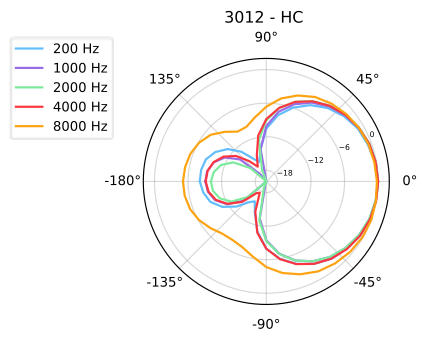
Standalone, the SKR0710 uses a gasket and asymmetric meshing to produce a fixed supercardioid in hardware — no software needed — optimized for voice up to 8 kHz. When paired with an omnidirectional microphone, signal processing combines the two to create a switchable cardioid across the full 20 Hz – 20 kHz range.

SNR is the most impactful factor. We recommend a PDM omnidirectional microphone with an SNR of >68 dBA for best performance. Both microphones should run through the same codec.

On the side opposite the SKR0710’s lid marking, as close as possible. The dipole and omnidirectional microphones should be placed in-line with one another.

A 3.072 MHz clock and 1.8 V supply. Lower clock rates increase high-frequency noise and reduce SNR; higher clocks or voltages only increase current draw with no performance benefit. Use a PDM interface with ≥24-bit resolution for maximum SNR.

Application Notes

Attributes of Directional MEMS Microphones

AN-110 walks through key attributes of Soundskrit’s directional microphones such as directionality, SNR, acoustic path length, and more.

Beamforming with the SKR0710

AN-242 describes how to appropriately combine an omnidirectional microphone with the SKR0710 in order to achieve optimal beamforming performance.


Using the SKR0710 as a Standalone Microphone

AN-320 describes how to use a gasket to enhance the directivity and SNR of the SKR0710 microphone.


Get in Touch With Us

Soundskrit challenges the old way of doing things with our proprietary hardware and software.